
Song Sung Blue | Film Review
Released December 25, 2025
Prestige Casting and the Cost of Playing It Safe
Song Sung Blue wants to be a tender portrait of marginal dreamers, people clinging to music as identity long after the spotlight has passed. It’s sincere, competently made, and clearly well-intentioned. But it never quite lands, because it features two of the biggest movie stars in modern history.
After eight thousand Wolverine movies, including last year’s victory tour in Deadpool & Wolverine, the highest grossing R-rated movie in American history, Hugh Jackman is not believable as a washed-up novelty singer. The film gestures at vulnerability by flashing his graying sideburns for a minute or two, then immediately lets him cover them up. The movie asks us to believe he’s running out of road, but his thirty-year-old MMA champion physique telegraphs that he’ll be just fine.
This is where Ethan Hawke becomes such an obviously better casting choice. Hawke is willing to be dangerous. He lets scenes go raw, awkward, unresolved. This film needed that kind of risk-taking energy: someone whose face and body already tell the story without asking the audience to pretend.
Kate Hudson has a related but slightly different problem. She could be great, but the performance never fully shakes its sitcom-adjacent tone. When her character loses a foot, a potentially devastating, life-altering event, the film treats it like the flu. She falls out of bed once, cries on the couch for a few scenes, and then gets back to normal.
It’s impossible not to think of Born on the Fourth of July, where Tom Cruise let his physical limitation dictate blocking, pacing, and rage. The performance worked because his body told the story. Hudson’s injury is framed around, hidden by wardrobe, and never allowed to inconvenience her in any meaningful way.
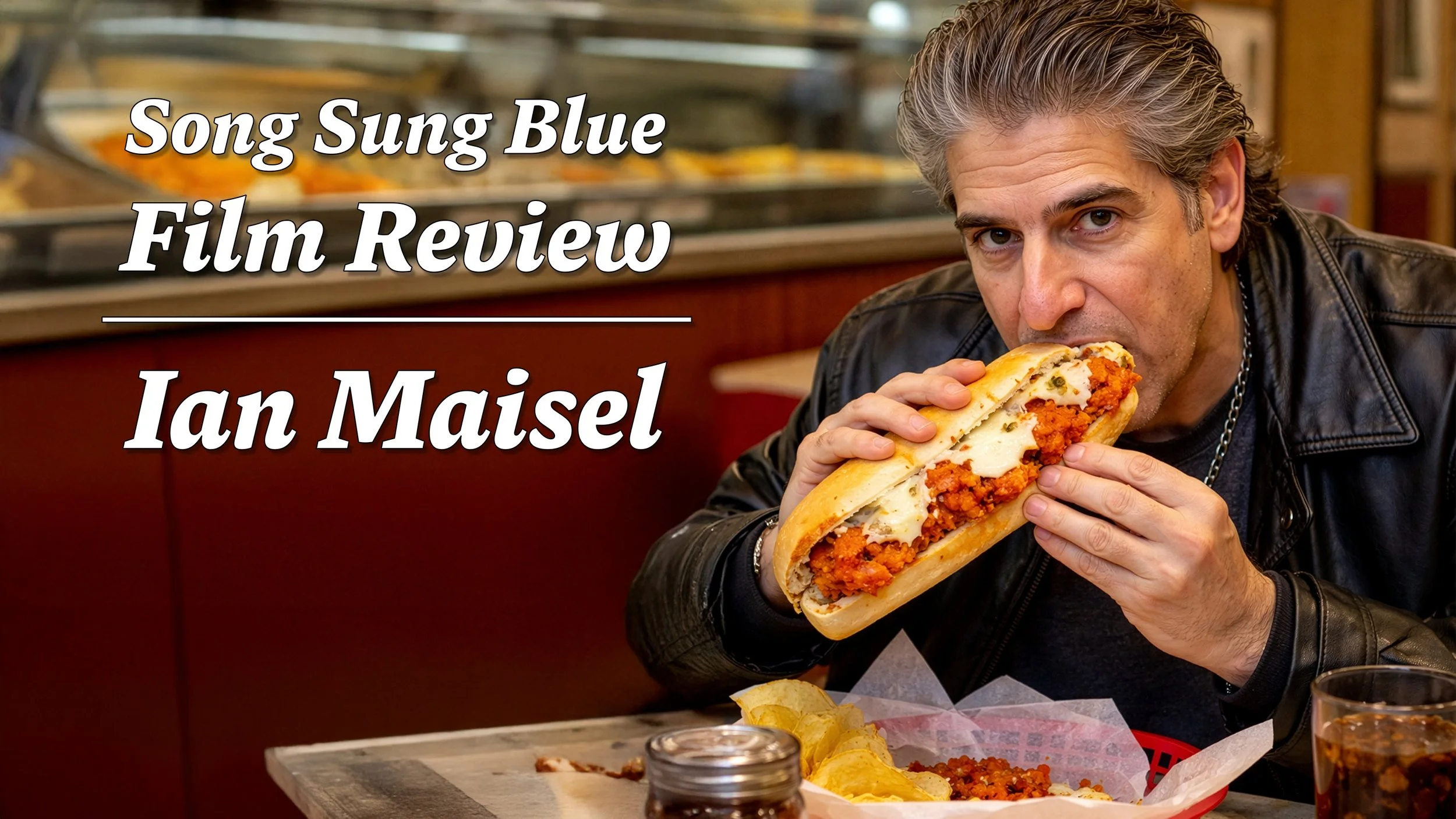
The film’s cautiousness extends to its supporting cast with the brilliant Michael Imperioli, Christopher from The Sopranos, who somehow earns third billing while barely having a speaking role. Fresh off an Emmy nomination from The White Lotus, Imperioli shows up like an absentee mafia enforcer. He clocks in, gives Hugh Jackman a fist bump, and then heads off to collect his per diem and a chicken parm.
Even the film’s aesthetic choices reinforce this distance. The cinematography leans dark and subdued. It might have worked if it had been paired with actors willing to be genuinely diminished. Instead, the darkness muffles what little joy and volatility Neil Diamond’s music could have brought. The soundtrack favors deep cuts, meaningful for fans but alienating for anyone outside that small audience, further limiting the film’s emotional reach.
The result is a film about longing that never risks embarrassment, about damage that never reshapes the body, and about obsession that never quite costs enough. You leave feeling like the movie kept its stars comfortable, even when the story begged them not to be.
